

Contemporary theatre movements can be defined as performance styles from 1945 onwards that push the boundaries of traditional theatre styles and conventions. They often consist of a range of conventions and features and can cut across art forms, genres and disciplines.
This unit focuses on the application of acting, direction and design in relation to contemporary theatre practice from 1945 to the present day. Students work in production roles to interpret scripts. They study developments and innovations in theatre and apply this knowledge to their own work.
Students develop knowledge of, and skills relating to, theatre production processes that include dramaturgy, planning, development and presentation to an audience, and they apply these to their own work. They study safe, ethical, inclusive and sustainable working practices (where possible, using environmentally sustainable approaches) in theatre production. They develop skills in theatre production analysis and evaluation, which they apply to their own work and to the work of other practitioners.
- Teacher: Rachelle Heath
- Teacher: Vanessa O'Neill
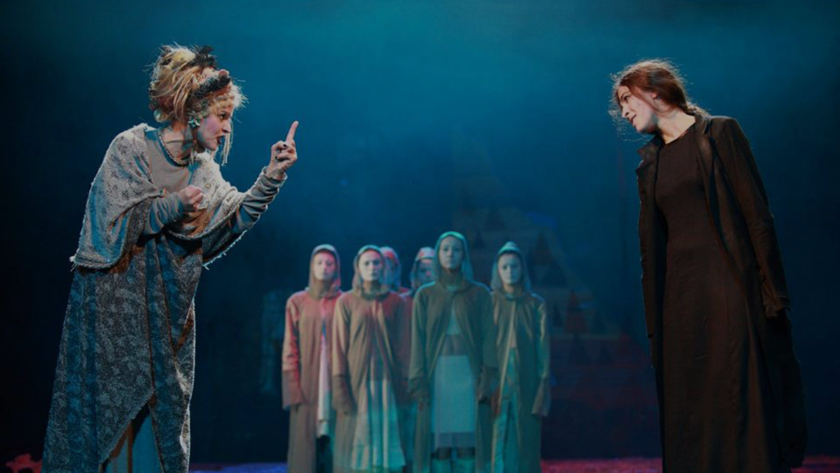
SUBJECT OVERVIEW: In VCE Theatre Studies students interpret scripts from the pre-modern era to the present day and produce theatre for audiences. Through practical and theoretical engagement with scripts they gain an insight into the origins and development of theatre and the influences of theatre on cultures and societies. Students apply dramaturgy and work in the production roles of actor, director and designer, developing an understanding and appreciation of the role and place of theatre practitioners. Throughout the study, students work individually and collaboratively in various production roles to creatively and imaginatively interpret scripts and to plan, develop and present productions. Students study the contexts – the times, places and cultures – of these scripts, as well as their language. They experiment with different possibilities for interpreting scripts and apply ideas and concepts in performance to an audience. They examine ways that meaning can be constructed and conveyed through theatre performance. Students consider their audiences and in their interpretations incorporate knowledge and understanding of audience culture, demographics and sensibilities. Students learn about innovations in theatre production across different times and places and apply this knowledge to their work. Through the study of plays and theatre styles, and by working in production roles to interpret scripts, students develop knowledge and understanding of theatre, its conventions and the elements of theatre composition. Students analyse and evaluate the production of professional theatre performances and consider the relationship to their own theatre production work. Students learn about and demonstrate an understanding of safe, ethical, and responsible personal and interpersonal practices in theatre production.
UNIT 1: Pre Modern Theatre Styles and Conventions: This unit focuses on the application of acting, direction and design in relation to theatre styles from the pre-modern era, that is, works prior to the 1920s. Students creatively and imaginatively work in production roles with scripts from the pre-modern era of theatre, focusing on at least three distinct theatre styles and their conventions. They study innovations in theatre production in the pre-modern era and apply this knowledge to their own works. Students develop knowledge and skills about theatre production processes including dramaturgy, planning, development and performance to an audience and apply this to their work. Theatre styles from the pre-modern era of theatre include Ancient Greek, Ancient Roman, Liturgical drama such as morality/miracle/mystery plays, Commedia dell’Arte, Elizabethan, Restoration comedies and dramas, Neo-classical, Naturalism/Realism, Beijing Opera, Noh, Bunraku and Kabuki and other traditional indigenous theatre forms. Students begin to develop skills of performance analysis and apply these to the analysis of a play in performance.
- Teacher: Ric Gill-Atkinson
- Teacher: Rachelle Heath
- Teacher: Vanessa O'Neill
- Teacher: Phoebe Witts

- Teacher: Megan O'Donnell
- Teacher: Phoebe Witts

- Teacher: Ric Gill-Atkinson
- Teacher: Phoebe Witts


- Teacher: Jahla Black
- Teacher: Phoebe Witts